
Inside the Franciscan Monastery ...
Re-creation of the Tomb of Jesus
(Gallery Has Five Pictures)
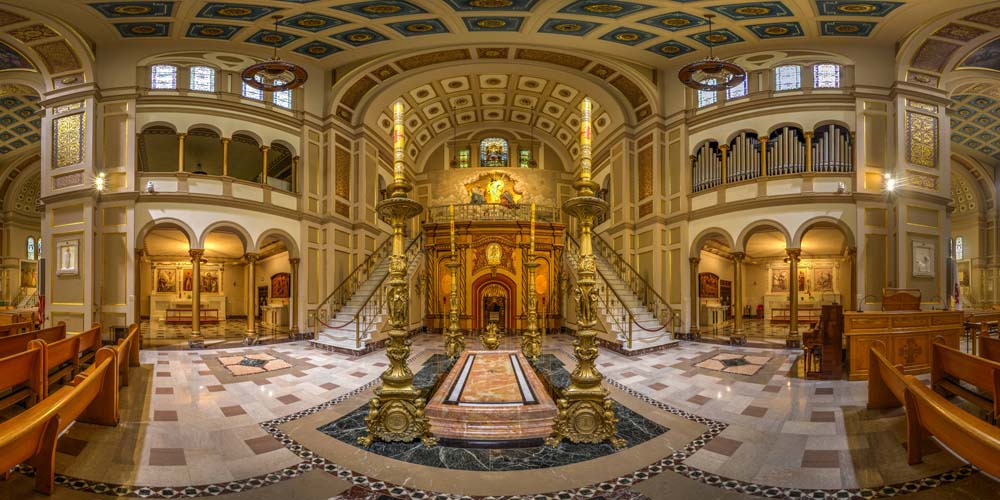
This is a panoramic view of the re-creation of the burial place of Jesus, as can be found in the Church of the Holy Sepulcher in Jerusalem. That church, completed in 335CE at the direction of the first Christian Byzantine Emperor, Constantine, covers the area of Gogatha, where Jesus was crucified, as well as the tomb of Jesus, which was provided by Joseph of Arimathea, a wealthy follower of Jesus.
Immediately in front of the tomb entry-way is the Stone of Annointing, where Jesus's body with washed and annointed. To the right is the St. Joseph Chapel, and to the left is the St. Francis Chapel. On the second floor up, to the right in this picture, can be seen organ pipes. On the rise directly above the tomb of Jesus is the mural of the Ascension.
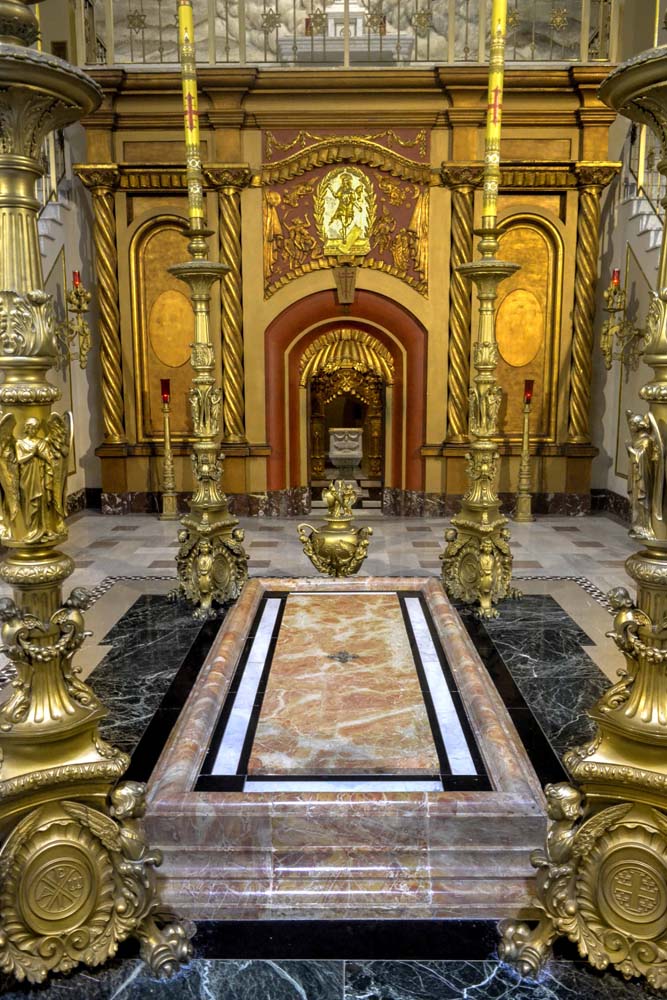
After being crucified, the body of Jesus was placed on a stone, called the Stone of Annointing, where Jesus's body with washed,annointed, and wrapped in clean linen. This is a re-creation of the Stone of Annointing; the original is in the Church of the Holy Sepulcher in Jerusalem, including being honored by huge gold candle-stick holders.
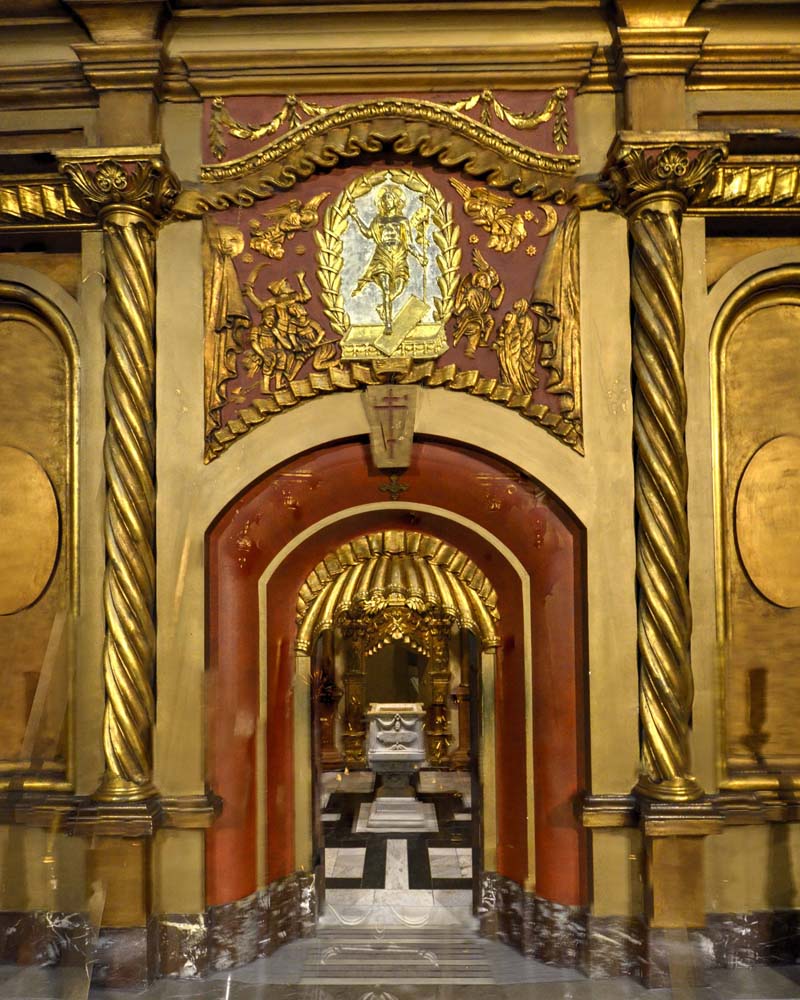
This is a close-up of the re-creation of the entry-way to the tomb of Jesus in the Church of the Holy Sepulcher in Jerusalem, as noted above. The tomb in Jerusalem was originally built into a hill-side, but most of the hill-side was removed to make room for the church, leaving only the original rock around the tomb. The rock around the tomb was then surrounded by a building called the Edicule of the Tomb, to protect it. Greek Orthodox Christians control and maintain most of the church, but other Christian groups have their areas as well, and each group has a candle at the door to the Edicule to represent them at this Holy site. The Catholic Church is represented here by the Franciscans.
Just inside the Edicule entry-way is the outer chamber of the tomb, in which is found a pedastle; on the pedastle is a rock from Jerusalem.
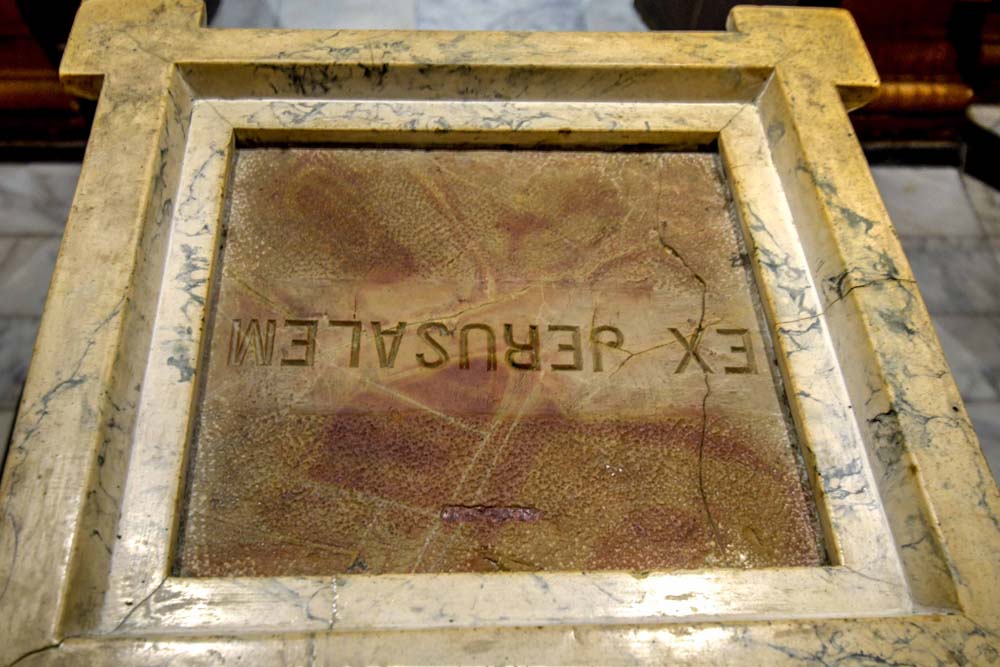
This rock was brought to the Franciscan Monastery from Jerusalem, and mounted on the pedistal in the outer chamber. Engraved in the rock is "Ex Jerusalem," meaning "From Jerusalem" in Latin.
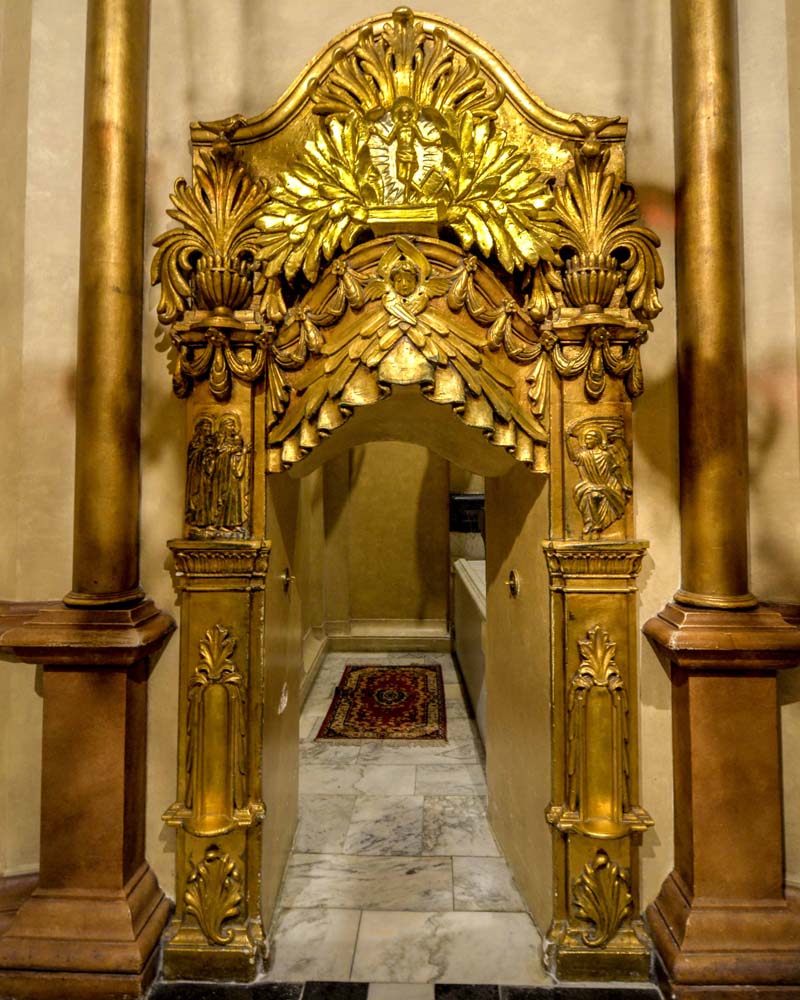
At the back of the outer chamber is an entry-way to the inner chamber. On the right inside the inner-chamber can be seen the re-creation of the burial shelf, on which the body of Jesus was laid after being prepared for burial on the Stone of Annointing.